Omadhaun published his first EP back in 2019, but found a true rebirth with his latest project, ‘Hornets’, on Inspected. He took his time getting to know his sound, perfecting his technical skills, and honing in on his niche interests. On the ‘Hornets EP’, we can hear him embracing the real and the artificial, the earthbound and the otherworldly, the abstract and the detailed – and that contrast is what Omadhaun is all about.
The UK artist released his first EP in 2019, and a second in 2026, but perhaps most surprisingly, he only learned to DJ during COVID, and only because he got invited to support Culprate on his album release tour. Not the most conventional path, but a fascinating one nonetheless.
Time for a chat with Omadhaun, where we talk about his entry into the scene, the ‘Hornets EP’, and what’s on the horizon.
Congratulations on your latest release! There’s a lot of detail in your tracks. How was it to work on this EP?
I always start with real instruments to set the scene. I need to create the vibe first, and I always reach for some sort of melody. ‘Hornets’, the opening song of the EP, starts with this intro section full of instruments that bring something human and biological to the track before it gets into the electronic drum & bass bits, because I really like having that contrast. I’ve got it in all my tunes, this contrast between real and artificial. I tried to get as many sounds that were buzzy, and I wanted to build a journey that starts with anticipation. About halfway through the track, you have the hornet’s nest being disturbed, it gets all chaotic, and the chase begins. I wanted the tune to get your fight or flight response going. ‘Through My Mind’, the second track, is based around a vocal mantra which came about when my girlfriend and I were singing into a plastic microphone from a karaoke game. The quality of the recordings was really lo-fi and rubbish in a way, but the way it came together, after we did a few harmonies, was just really ethereal and psychedelic, so I went with that and built the whole track around that. It’s one of those things where, if the quality is a bit bad or strange, that creates the whole vibe.
The imperfection makes it perfect, almost.
Exactly. It took away the choice of how they were going to sound, and I had to roll with that. Then, going back to the tunes on my EP… For ‘String Theory’, the first thing I started with was the violins. They run all the way through the track. I just thought they were so dramatic-sounding, and I wanted to build on that and have one drop after the other. This is definitely my heaviest track, and the one most fit for a club setting. I wanted the synthesised sounds to be disgusting, ugly, and the opposite of how the strings sound. ‘Vesuvius’, the next track on the EP, has a lot of history. It’s a project that’s been open on my laptop for a few years now, and within that project, I’ve done a lot of learning. It was my testing ground for all the new techniques that I learned. I really enjoyed every time I learned something new, applying it, so there have been lots of versions of that track. It is still very chaotic with lots of different ideas and things happening, which is a result of how long I’ve been on it for.
How do you decide when a track is finished? Especially with a project like ‘Vesuvius’, where it’s your testing ground?
When the time is up. This release wasn’t finished before I pitched it to the label. The label gave me deadlines, and I worked to fit those. Calling a song finished is something that I’m learning more about at the moment. I haven’t finished very much music, so I find it a bit tricky, because I want to carry on playing with it forever. I really enjoy the process, and all of my music has come from stuff I’ve made purely to entertain myself. I did have a point with this EP where I decided they were all going to be drum & bass tracks, this type of length, this type of vibe, etc.
There’s one more song on the EP that we’ve not talked about yet. It’s a remix of ‘Internal Locust’ by Culprate. The original song was released on your first EP back in 2019. Why did you decide to bring that one back?
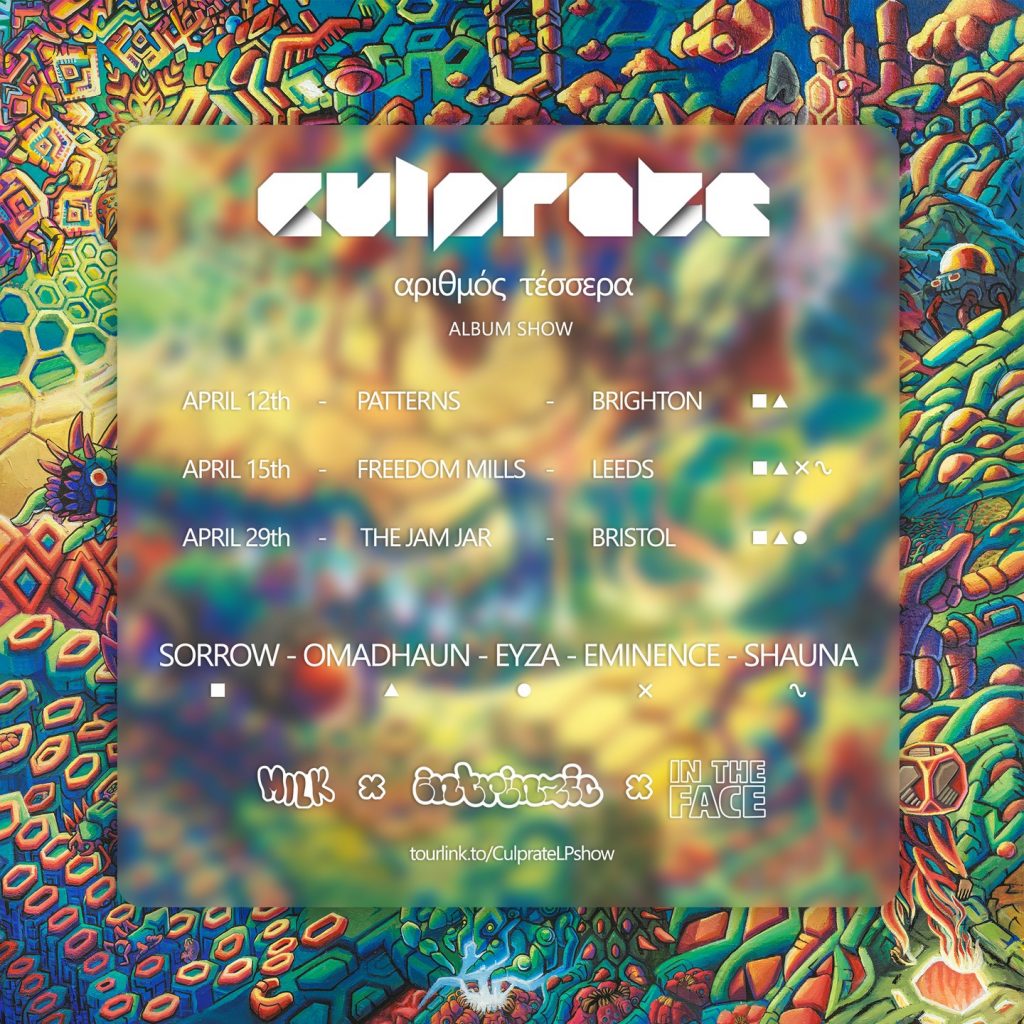
This song was my entrance into the scene through Culprate. During lockdown, he’d do a weekly feedback stream where you could send in your own tracks. That song was already out at the time, on a self-release, and I sent it into the stream just to see what he thought of it. Almost right off the back of hearing that song, he got in touch with me and asked if I wanted to play support at the shows for his αριθμός τέσσερα (Number Four) album. I couldn’t believe it, because he was such a huge influence on me. I hadn’t released much other music than that one self-release EP, and I didn’t even know how to DJ or anything. I told him all that, and he just said, “It’s fine, you can learn.” For this EP, I wanted to bring that track back firstly because he wanted to remix that one, and secondly because of his influence on my music and on this EP. He did the mastering for it, he helped me pitch it to Inspected, and while I was learning a lot of stuff about production, he was very generously able to answer a bunch of my questions I had. He’s been really supportive with it, and this remix feels like a full-circle moment. It also fits the insect theme, with the name being ‘Internal Locust’, and there are some buzzing sounds in the song as well.
This EP has a clear theme, which is insects, but other than that, where does your inspiration come from?
It’s hard to say because some days I wake up with it and some days I don’t, but it always starts with something melodic, humanising, and accessible in that sense. A lot of my influence comes from other types of music as well, particularly in terms of melody. I get ideas from that. Since I got into DJing, I’ve had a few gigs, and I’ve played at a few festivals like Boomtown, and that reality now has a huge influence on me. When I’m making something, I’m imagining playing it out to people, and I want it to go down well in the dance. A festival vibe is what I imagine most. I think about playing it at Boomtown at the End of the Line stage, which is where I’ve been booked the last couple of years. That’s where the purpose part of the inspiration comes from. Real-world sounds with electronic sounds are something I’ve always liked as well. I don’t make stuff that’s just all electronic sounds because I need that human touch in it. I want the contrast of it being earthbound, but then also a bit otherworldly and crazy. And again, I’ve got to say Culprate has been a big inspiration, as well as lots of people in the Bristol scene, and the Inspected label. I grew up listening to that music, which is why it’s quite crazy to have a release on it now. My family, relatives, and friends are a big influence as well because I care what they think about my music.
And to go back to the theme of the EP… Why hornets?
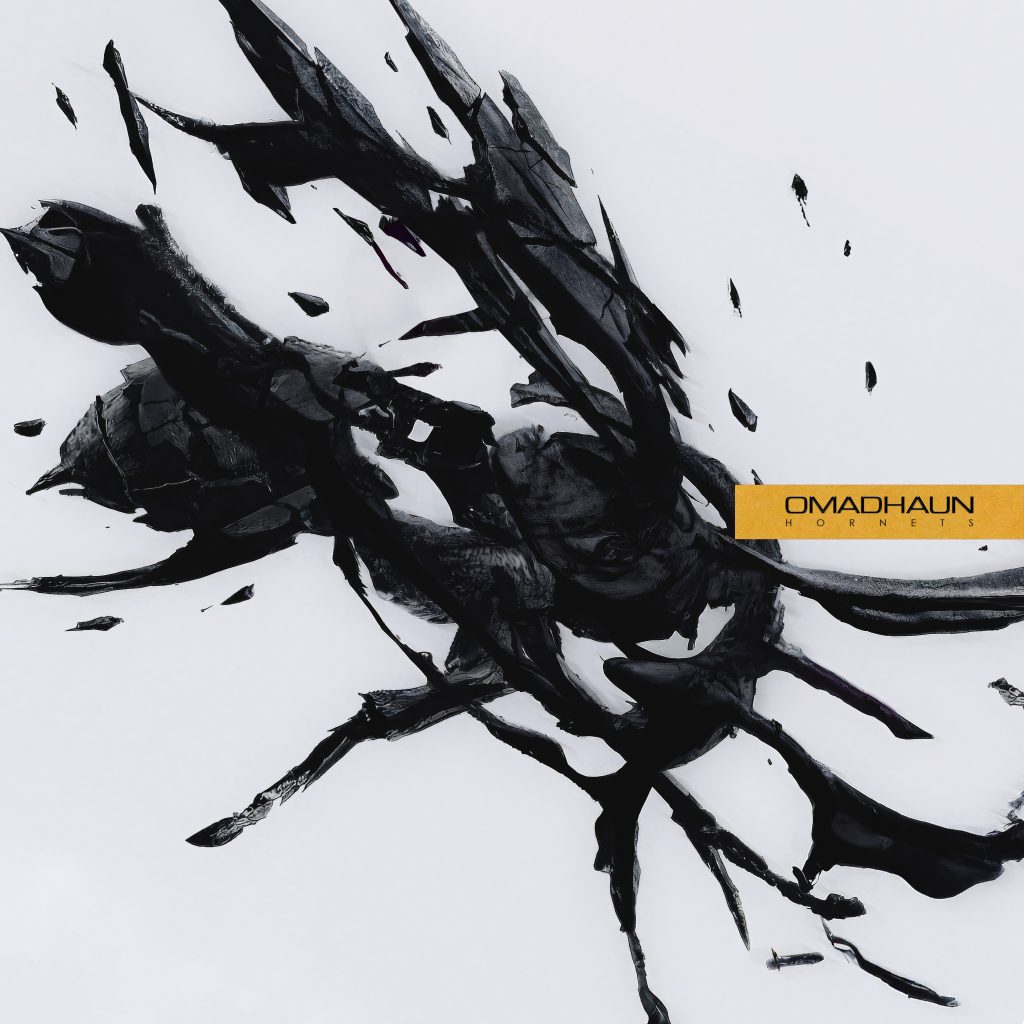
I don’t normally name tracks until I’ve fully finished them, but with Hornets it was obvious. I had been thinking about intentionally putting in the insect sounds, and out of all the tracks, it had the strongest imagery. It’s specific and memorable, as opposed to something more abstract. Even though my music is abstract in some ways, I also like to tie it to whatever is specific about it. It helps people relate more, and I really love the album art. I think Kasper Plougmand did an amazing job on it, and it would have been hard to do something so specific like that for any of the other track names. And, as I said earlier, it keeps in the theme with my last EP having an insect-related name. I don’t know if I’m always going to name my music after insects, but I do think that insects seem to capture the essence of my music well for some reason. They are biological, and they’re earthbound; you can relate to them in that way, but then when you look at them up close, they’re actually really otherworldly and mechanical, terrifying and beautiful. They’re such a normal thing, but they’re also alien. Something about that resonates with how I feel about music.
How was it to work with Inspected?
This is my first time working with a label, so I didn’t really know what to expect, but working with Inspected has been amazing. The level of care and attention to every aspect of the release has been amazing. I’ve had so much say in everything, and the label has had loads of input as well. All of the input from the label has only ever enhanced or improved my vision of what I wanted it to be. I’ve never felt that I’ve had to compromise or be at odds with the label about anything creatively. I felt like I’ve been wanted for who I am, and my music has been able to speak its truth through this label. It’s all been great.
Earlier, you talked about your first EP, which came out back in 2019. Let’s go back to that period… How did you get into production, and where did you learn the ropes?
My first experience was at school. We used this program called Dance eJay, a basic software where you could arrange loops, and I remember getting really carried away with it. Afterwards, I got a free DAW app for my iPod Touch, which was called NanoStudio. That was my first experience with basic synthesizers, sequencing MIDI drums, and stuff like that. I was largely making hip-hop at this point, and then later on at school, I did music in my GCSE, and we worked with Cubase. I didn’t really get serious about it until I did a one-year music technology course when I was 18. It was on Logic Pro, and I spent all day at the studio. There were some really good teachers there who taught me a lot of useful things, and I became friendly with the studio technicians, because I was just there all the time, and they would let me use all the different equipment. Ultimately, it was they who pushed me to actually release the Internal Locust EP. Whenever I asked them for help with a track, they would ask me, “When are you putting this out?”. So, in the end, I decided to self-release it, but I wasn’t switched on to things like promo or anything like that. I just put it out, and then after that course, I came to Bristol for university, which was unrelated to music. Soon after I started in Bristol, I had that exchange with Culprate that I mentioned earlier; he invited me to shows, linked me up with Intrinsic, and I met so many amazing people. I had gigs through Culprate and through Intrinsic, and that was really what got me into the scene. The main reason I chose to come to Bristol for university was the music scene here in the first place, and I wanted to get involved with it.
Between your first EP and this one is seven years. What’s the reason for this?
I’ve been busy. I did my degree, which took me five years, so that took up a lot of my time. And it’s not that I’ve been away from the music scene entirely during that time, because that’s when the Culprate and Intrinsic shows were happening. I was still working on my producing and still learning new stuff. I felt like I needed a period of getting back to basics, or learning them in the first place. My first experience with production was just me playing around with various software. I didn’t watch any tutorials, read much about it, or spend much time with other people working on stuff. In the period between my first EP and now, I started to go back and uncover all these essential production techniques. Towards the end of that gap, I was really getting into production and focusing on that, and thinking, can I make anything sound good before I can make something that’s a bit crazy and has loads of stuff going on sound good? It was like trying to run before you can walk. It feels really good to finally feel like I can execute my musical ideas well. During that time, I also got into DJing.
This is your rebirth! And then something else. Your name is Omadhaun, which is quite an unusual name. Where does it come from?
It’s the Anglicized spelling of an Irish Gaelic word, which means “a fool” or “an idiot”, someone who’s out of their senses. I got it from my late granddad, who was from Ireland. It’s something he used to endearingly say. He’d call people an “omadhaun” in an endearing way, and I really liked the meaning of it. People tend to have a bit of trouble with how to pronounce it and how to spell it, which is a slight drawback of it, but getting myself out there enough will force people to learn my name. It looks really cool written down as well; it’s quite symmetrical.
What’s next for you?
I’m going to be exploring collaboration quite a bit now. I’ve already been doing a bit of it, but nothing’s come out yet. There are a bunch of really amazing artists that I really can’t wait to collaborate with. I’ve got a couple of them on the go already. It’s going to be all sorts of stuff. I think there’ll definitely be some more drum & bass, but don’t expect it to be strictly that. I don’t really want to describe it yet, but it’s going to have my style and my sound, and I’ll still have the same ideas running through it, but the genre might be undecided. I’m looking forward to playing with it a bit. My next few things are probably going to be collaborative, and EPs are a good format for me. I’m really excited about it.
You can support, buy, stream Omadhaun’s Hornet EP here.
Omadhaun
Instagram
SoundCloud
Article produced in commercial collaboration with Inspected.