Soa420’s first soundsystem was her family. She grew up in a Franco-Malagasy household in the Paris suburbs, on her siblings’ reggae and dancehall and her mother’s Malagasy singing. Music as something spiritual before it was ever a dancefloor question. The clubs came later, during a year in Berlin, where she figured out what she was actually chasing: a body, a soundsystem, the physical thing.
She brought it back to Nantes in 2018, embedded at Macadam, and a year later co-founded Zone Rouge, a women-identifying collective that gave her room to learn the decks without any judgment. Her debut EP No Nerve landed on Beatrice M.’s Bait in September 2024: halftime, doom-leaning, vocal samples chopped into something you feel more than hear. A second one, Red Island, a nod to Madagascar, drops in a few weeks.
This Friday, she opens WORMS at Badaboum on May 15th, alongside Sam Binga, Samurai Breaks, and Vitaline. We caught her before the date.
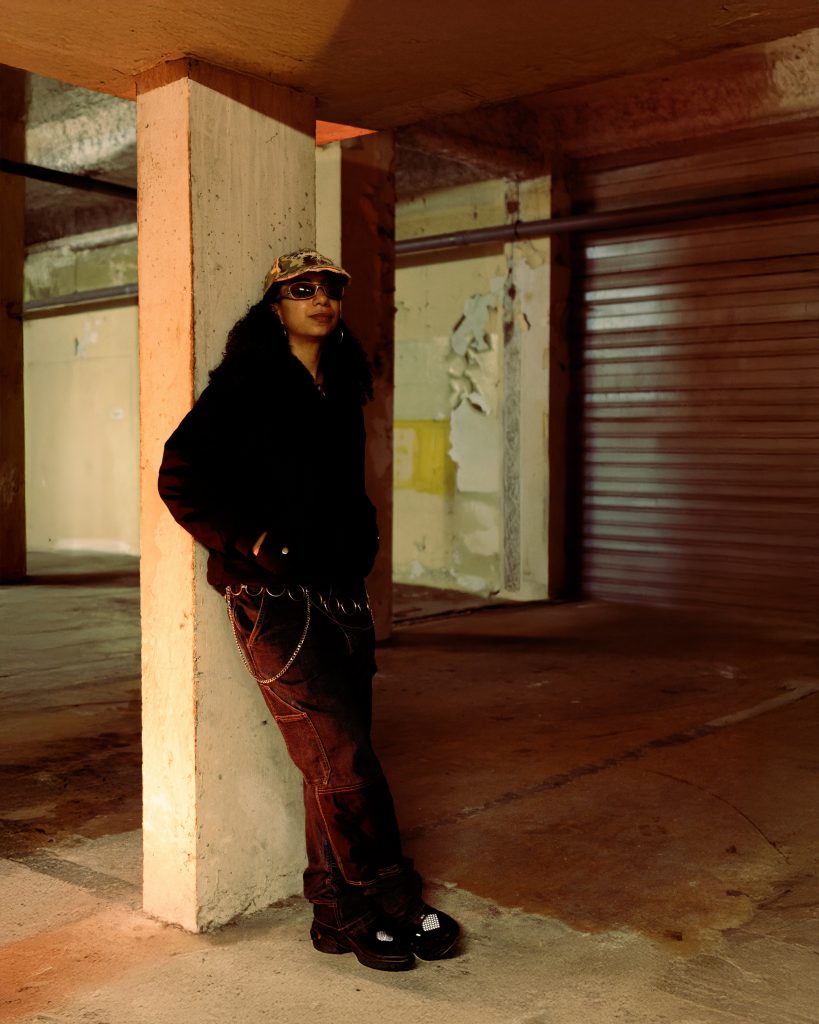
Hey Anais, how are you?
Hey! I’m good, thank you. And you, mate?
I’m great, thanks! So, you grew up in a Franco-Malagasy family of musicians with reggae, R&B, and dancehall in the house. How does that background show up in your approach to bass music?
I especially owed this contemporary musical legacy to my four older siblings. It was with my family that I had my first real festival experience, at Reggae Sun Ska in 2012. And also my mother, who was a singer of traditional Malagasy songs, and she transmitted to me the depth and spirituality of music. Today I want to pass on this legacy through tracks and DJ sets that embrace all my influences, and I’ve found that fusion in bass music and especially dubstep.
You spent a year in Berlin, usually considered the holy land of 4/4 techno, where you discovered club culture. How did that first contact with clubs shape you?
I grew up in a family of party people; there were plenty of parties with a great atmosphere. One of my uncles even owned a nightclub in Brittany for a while, and I looked up to him so much. But as I got older, I didn’t go clubbing in Paris. Having grown up in the suburbs, I didn’t really feel I belonged there. That’s in Berlin, where I realised what I was really looking for in my clubbing experiences: the body in communion with the music, thanks to good sound systems and raw spaces, like a physical experience. It was beyond the techno music style, which I also enjoy; it was about music sensations on the dancefloor. And since then, I’ve become addicted to dancefloors, haha.
And from Berlin, you landed in Nantes. How did that city and those communities build your identity as a DJ?
When I returned to France, I dreamed of recreating that club sound experience here, and that’s how I started working on the Macadam’s hospitality team in 2018. Without those years of experience at that club, I certainly wouldn’t be DJing today. I was able to start thanks to all the people I met there, notably with the creation of the Zone Rouge crew in 2019. A collective only composed of people who identify as women, where I was able to learn to DJ without pressure or judgment regarding my technique and my track selection. The club’s sound system was and still is managed by sound engineer Guillaume Combeuil, aka Combe, and I think his approach particularly reflects the Nantes club scene: technical rigor and sound generosity.
Your debut EP, No Nerve, found its home on Bait, placing you right at the epicenter of the French dubstep renewal and the emerging ‘low-end psychedelia’ movement. How has your relationship with Beatrice M. and this growing grassroots community shaped your approach to deep, textural bass?
I’ve been very influenced by the late festival Positive Education that used to take place in St Etienne, in France. The lineups mixed and brought together techno and bass, united by a shared approach to deepness. Meeting Beatrice and working with Bait was a revelation that allowed me to fully embrace my musical hybridity, from bass to techno and more (dub, trap, house music). And I’m actually releasing a new EP in a few weeks called Red Island that brings together all these various sources of inspiration!
You’re spending time in London now, playing nights like HVYWGHT. What’s the difference in how crowds respond on either side of the Channel?
There’s obviously a big difference as the Soundsystem culture developed itself in London thanks to the Jamaican community, so it’s really part of the crowd habits. Also, the sound systems are always loud and subby, which is important to fully experience and appreciate the mixdown of electronic tracks.
Speaking of events, your gigs range from experimental festivals like Variations to Outlook Origins in Croatia. Do you prep differently for those two worlds, or is it the same approach?
It’s not really the same approach, in terms of selection and even technique. But I always have this central theme that I want to tell a story that evokes emotions, whether it’s festive or emotive.
You’re playing WORMS at Badaboum this Friday, on May 15th. What should people expect from your set?
It’ll be an opening set that sets the tone for the party, starting with dub and dubstep sounds before moving on to broken and percussive beats!
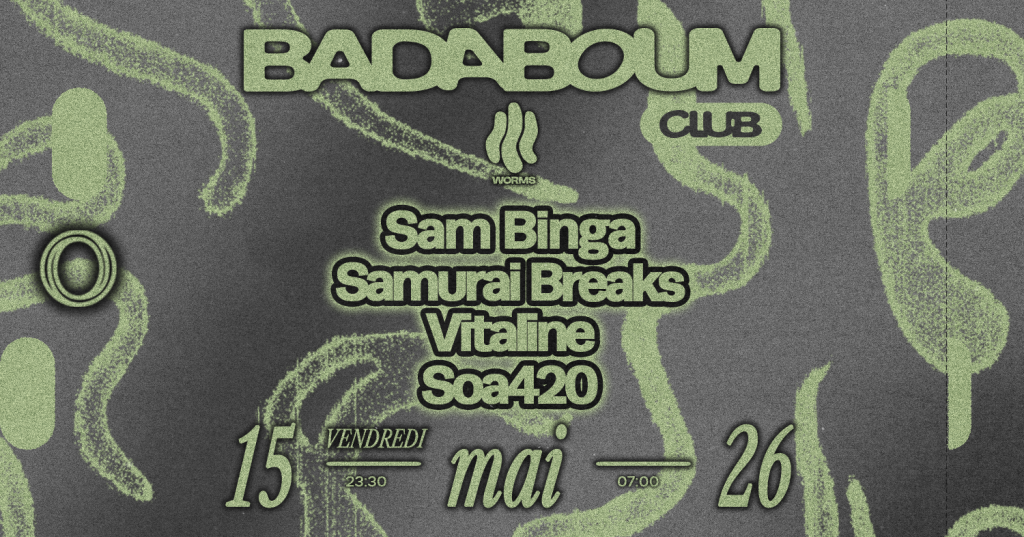
Thanks to Anais for the great chat. You can see her play in Paris at the next WORMS event this Friday. Tickets available here.