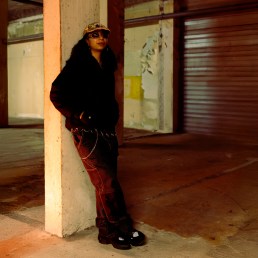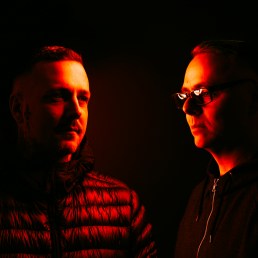
At first glance, VIER might look like a collision of musical worlds. Thys, Machinedrum, Salvador Breed, and Holly are four artists with distinct backgrounds, influences, and even languages. Yet, they share a singular philosophy: tearing down expectations and bringing joy to the dance floor.
That is exactly what they’ve done since releasing ‘Frankfurt’ in January 2025, a track that immediately took the bass scene by storm. They kept that momentum alive with a string of releases, culminating in their highlight album, IIII.
We sat down with the quartet to discuss how they met, how they inspire one another, and what the future holds for the group. Or, as they like to put it: “VIER IS HIER.”
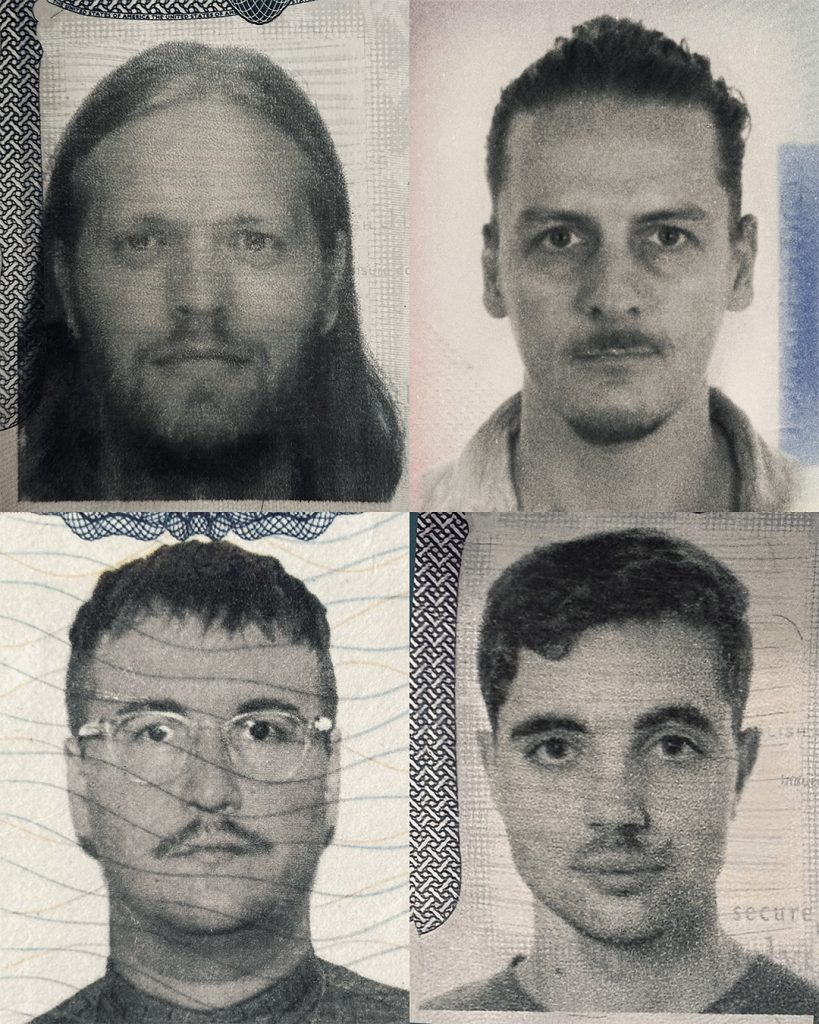
How did the project start?
Thys: Travis (Machinedrum) and Miguel (Holly) had previously released the River of Heaven EP on VISION. As part of the promotion, they were booked for a set in Eindhoven, and the label suggested I interview them at my studio. We decided to schedule some studio time around the chat, and that’s where it all began. Travis and Salvador (Breed) had already collaborated before, as had Salvador and I, so he joined us on the second day. We weren’t intentionally writing for a specific project or band; we were just having fun. One of those early tracks, “YOU,” was eventually released on my own EP, and while it didn’t feature Salvador, the process was so similar that it could have easily been the first VIER track.
When did you realise this would be different from another collaboration?
Machinedrum: One of us started a group chat, which immediately made things feel more official. It gave us the incentive to keep in touch regarding the songs we’d started, and soon we were constantly trading works in progress. As the tracks began to pile up, the project took on a life of its own. It was likely Thys who eventually led the charge, suggesting we actually put the music out and turn it into an album.
Thys: I recognized how effortless it was to write together and how quickly the quality reached a high level.
Salvador Breed: The sheer volume and speed of the material we created was incredible. If you look at our output, only about half of the tracks with potential actually made it onto the album. There is still so much material left over.
Machinedrum: When a collaboration works, regardless of the number of people involved, you notice how fast things click. When we realised that this natural, flow-based collaboration was happening with four people, we knew we had to take advantage of it. I think we all felt that.
Thys: There was zero pressure. I remember during the NOISIA days, we did collaborations where there were so many internalised expectations, but we didn’t have any of that here. We could do whatever we wanted.
Salvador Breed: We are all genuinely excited by each other’s work. We each have our own musical languages, but we’ve found that we love the way those languages speak to one another. That’s something truly special.
You all come from different parts of the world, but still speak the same language of music. What makes your music so diverse?
Salvador Breed: The diversity comes from our diverse interests and our need to break out of genres and expectations that people get from us together, but also from how a song starts and where it goes. We all have this same need, even in the working process. I loved it when somebody made something, and then somebody else worked on it, it sounded completely different. You could still recognise it, but the development was so different. It really was like cooking together.
How did you all meet?
Holly: I met Machinedrum in 2014 at a festival in Barcelona. I was there with my brother, and we had the idea of bringing a lot of USBs and then throwing them on stage. You never know who might find them. I ended up meeting Machinedrum, and I gave him one of those USBs, which was the first interaction we had. We properly met in 2019, when I was staying with a friend of mine who also knew Machinedrum. We ended up going to Machinedrum’s house, and that’s how we became friends, too. We started sending each other demo’s and that’s how we ended up making the “Berry Patch” EP. I met Salvador at the VISION party in Eindhoven when we got into the studio for the first time, three days after I met Thys.
Salvador: Yeah, we met the latest. I met Travis (Machinedrum) because I was working on a fashion show by my girlfriend Iris van Herpen. She did a show in Paris, and we were thinking about what songs would fit the theme/collection. We both really liked this one track by Machinedrum, so we ended up using it for the show. I contacted him, and it turned out his wife was also a stylist. At some point, I co-curated a festival, Le Guess Who?, and Thys reached out because he was listening to all the artists that we invited. He recognised the palette of music that we were into.
Machinedrum: The first time I met Thys was when he approached me to do a remix for NOISIA, around 2016, when Human Energy came out.
Holly: Thys and I met online because he played one of my songs on VISION radio, but we might have met in Groningen at a party, or at ADE.
Salvador: But music-wise, I know we’ve known each other much longer.
Thys: Absolutely, because I was playing Holly’s records and Travis’s records for a very long time already.
You teased the project just under a year ago. How has it been so far?
Machinedrum: When we dropped the first single, we didn’t really reveal that we were going to do anything else. We just dropped the single, and people were freaking out.
Thys: We announced that we were going to release an album in September, but until about June or July, we were talking about an EP. We’d already released four or five songs by the time we thought, we’re not making an EP anymore, we’re making an album. Having that little run of shows, playing in Groningen, Berlin, and then twice in Amsterdam for ADE, and we also came on stage together when I played back-to-back with Nicky Nair. During these five shows, the whole project really came alive. That’s when it all connected.
Salvador: I had never released dance music before this. I released more ‘listening music’, and the feedback from my audience is much harder to read. When we released this album and were testing the songs out on the dancefloor, you could see these people really going for it, and I love that about this release.
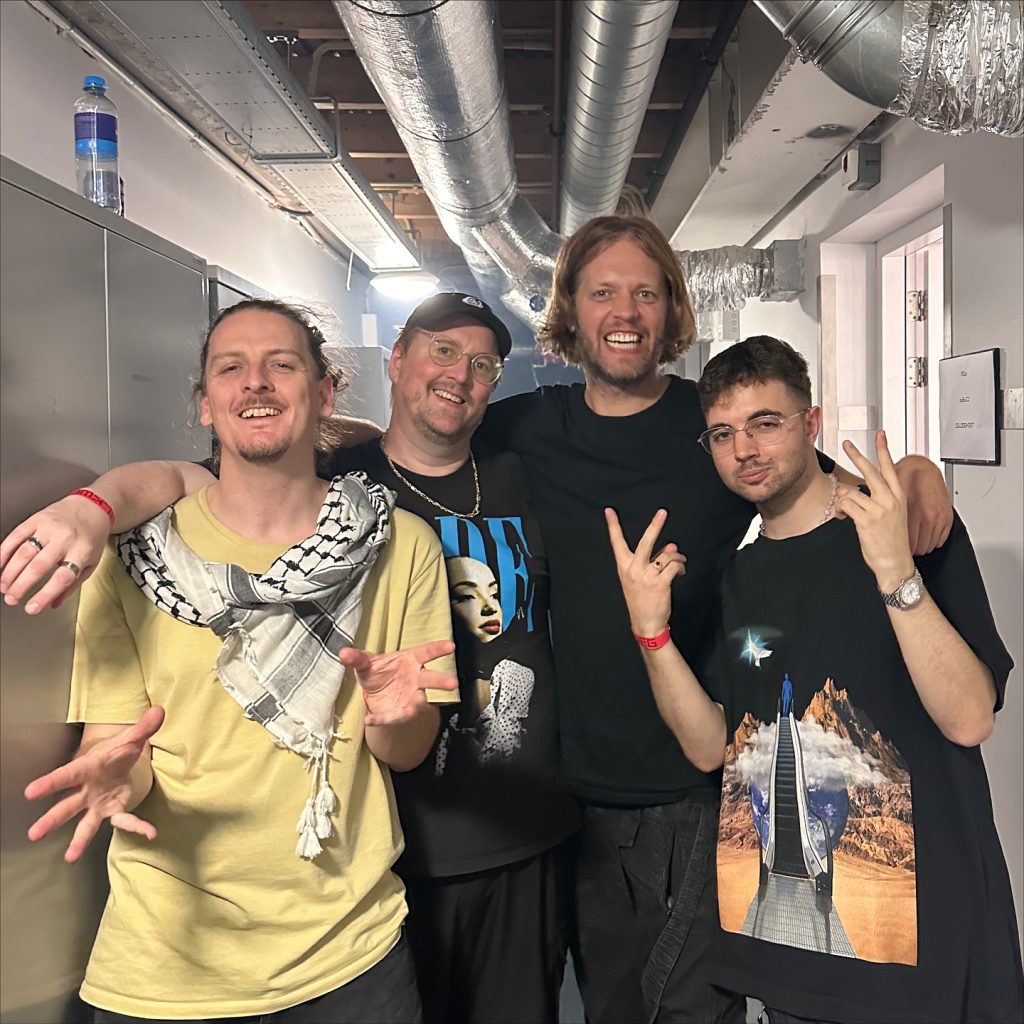
And how did it feel to come out with that secret?
Holly: When I was posting this on Instagram for the first time, I remember thinking, “This is crazy”. It was, and still is, very exciting and inspiring. There are a lot of life lessons that come from collaborations like this. When you can come together with your friends and make something that’s inspiring, that’s a great feeling.
Salvador: I’m so proud of the work and still listen to it quite a lot. I loved the process of making these tracks, listening to different versions, feedbacking to each other, and then having it go to what it is now.
In October, you released IIII, the debut album. How was it working together?
Machinedrum: We started a lot of the ideas in person during that session in Groningen at Thys’ studio. It lit the spark to start the project. Once we realised that we had such an effortless workflow together, we wanted to start making more. We also recognised the logistical difficulties of us doing that, so we decided not to be as strict in regards to having to do everything in person. In a way, we had already established a workflow that consisted of us passing a song on to the next person. Even in that initial studio session, we were using this egg-shaped cooking timer. We would all be working on separate ideas, and then the egg timer would go off, and we would swap the ideas and swap the sessions. We continued that process virtually by sending ideas back and forth online. We didn’t have the egg timer to keep us in a flow, but it was a very similar process.
Thys: After the run of shows, we did the same thing in Salvador’s studio. We didn’t even send the files over this time. Instead, we just had workstations, and we would swap seats every 15-20 minutes. It was really inspiring because you would use other people’s stems and plug-ins, and you would discover new things.
Machinedrum: It wasn’t necessarily a bad thing, but I did notice that when we were working virtually, some of us would have a bit more of our identity infused into a song than the others. But what was cool about it was when I would work on something that Miguel (Holly) sent me, and then I would send it over to Thys, and then he and Salvador were getting the studio together… And then they would send us back something completely different from the original that I sent over. That wouldn’t have been able to happen if we were together, because we wouldn’t have had enough time to transform the songs into something completely different. We learned to embrace the changes that would come from sending it to the next person to work on, and it led to really interesting development on the songs. They would take these sudden turns and twists that we just would never expect. It came from us all, completely trusting each other.
Thys: I learned collaboration is important during the NOISIA days, and during the Dead Limit session, I learned a valuable lesson. Sometimes you have to get out of the way of the music and try to let it form a momentum. At some point, you’ll recognise that momentum is going somewhere, and then you can start controlling it again and gently push it in the direction that you want.
How did you inspire each other?
Salvador: We’re all team players. We have all collaborated in the past and know to trust the process.
Machinedrum: It’s important to recognise the differences between our personalities and how that helped influence the project. Miguel (Holly) was saying how he already has practised this form of letting go and collaborations in the past, which helped us to recognise that he was so open to us doing whatever we wanted, whether it was changing the BPMs or completely deleting parts. This inspired us to embrace that, and we learned from Miguel’s personality. Something I noticed with Thys is that he’s very aware of what’s going to work on the dance floor, and aware of when things are going off the rails too much and need to be reined in. And Salvador has this really beautiful abstract way of looking at everything. We’ve talked about how his experience of synesthesia and being able to relate to sounds as colour. Hearing him talk about music and what we were doing inspired new ideas and new approaches. His almost psychic connection with music made me pay attention to those details a bit more.
Salvador: It’s a different type of flow when you’re writing music for the dancefloor as opposed to composing a 13-minute piece exploring different themes. It’s very different. I learned so much from this process. I was working on a composition for a modern dance piece that premiered in Paris recently, and I noticed that I was using elements from our process to work on this piece.
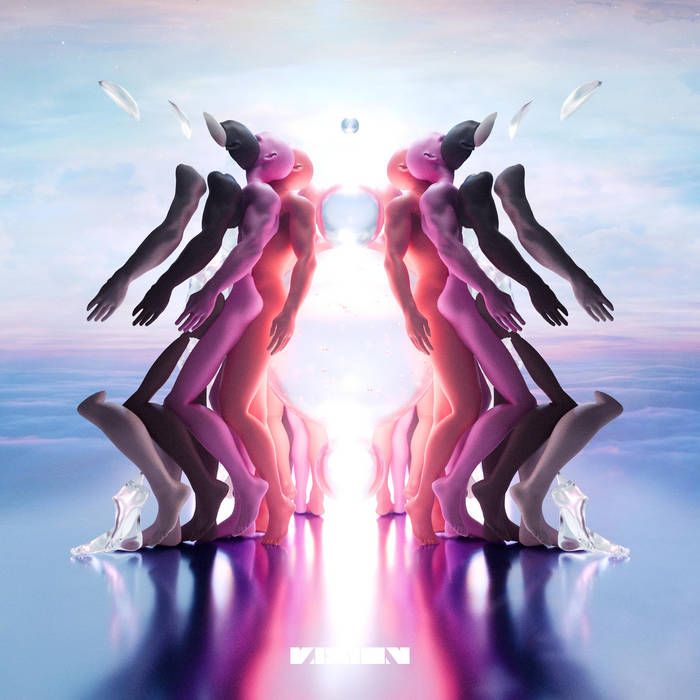
The album artwork is amazing. Where did the idea come from? Is there a storyline behind the album?
Salvador: The artist behind this artwork is Willem Stapel. The first artwork he did for us was for Where Were You, and we had a good connection instantly. I already knew him a bit through the fashion scene. We spoke about what we wanted to create and what we wanted to communicate through this artwork, and the first collaboration with Willem was fantastic. The great thing about his art is that he doesn’t make the visuals “electronic” looking. We are four dudes playing electronic music, but I wanted it to look fresh, and I wanted it to have a very different visual language than you would normally expect. I think we have achieved that. People look at the record and think, I really want to listen to this music, without knowing what’s on it, just by looking at the visuals.
Machinedrum: It really captures the energy of being able to create something together, in a flow that is bigger than all of ours. I really appreciated that the artwork didn’t end up leaning into masculine energy. Willem was able to tap into a very feminine, almost androgynous energy. It softens up our visual identity. We’re definitely making tunes that are hard and aggressive, but there’s also a lot of beautiful light moments. This artwork captures this amazingly. In our scene in general, I find that a lot of artwork in bass music tends to lean towards that more darker masculine energy, so I like working with artists that are embracing everything to make it more inclusive. It was a perfect fit to work with Willem.
Thys: And I love the fact that the previous album that he worked on was with Paris Hilton. It’s very easy to hear bass music as masculine, but it shouldn’t always be like that. Bass music has a masculine image problem. There are way too many dudes on stage, and there are not enough creative women who feel like they are allowed to make music on laptops, but that’s changing. With this artwork, we managed to mix all the energies that are present in the music. I like the concept of Yin-Yang and this philosophy where the opposite doesn’t exist without the other opposite.
We heard there is a special story behind ‘Look at the Trees’…
Machinedrum: Just before the first VIER session, it was the day after the festival in Eindhoven, and we were all getting ready to drive to Groningen together, Holly, Thys, and I. When we were about to leave, we saw that this guy was just screaming. I couldn’t understand what he was saying, but he looked like he was screaming at the sky, and he probably had some mental issues. So we started thinking of things he could be screaming about. It was such a beautiful day outside, so what could he be so angry about? He could be like, “Wow, it’s such a beautiful day”!
Thys: Look at the trees!
Machinedrum: We were all chiming in on these beautiful things that he could be angry about. We would bring this joke up every now and then throughout that day, but then I had forgotten about it. When we were in the studio the second day, Thys and I had started this insane punk electronic track, and we were trying to make it as distorted and unlistenable as possible. We were thinking that it needed some screaming vocals. Thys then stepped up, grabbed the microphone, and started screaming, “Fuck, it’s such a beautiful day!”.
Thys: Look at the trees! And it just became a song.
Machinedrum: Then, Miguel (Holly) added his lyrics. In Miguel’s fashion, he had the chillest verse on the track. We all ended up adding our own vocals, in the concept of being angry about how beautiful the day is.
Thys: I would play it a couple of times at the end of my sets because it would usually get a good reaction, plus I wanted people to learn the lyrics. It’s only three lines, so people remember it quite fast. We played it about four or five times at ADE in 2024. We were in Salvador’s house writing new material during that time, and that’s when we decided to put a track out in January.
When you’re playing together, do you plan your sets, or how does it work?
Thys: During the last couple sets, we shared a lot of our USBs, just so we don’t have these gaps at a certain BPMs where I would have 30 tracks at 160, and then Miguel has maybe one, but then if he takes five of mine and he plays those… we keep the back-to-back energy flowing. The last set we played was three hours of back-to-back mixing, so we’re comfortable with each other.
Holly: Yeah, we like being on stage together.
Salvador: Before the first set, I realised that my music was way too mellow for a VIER set. I realised I needed to up my energy level. I’m from the Amsterdam scene, and I’m used to more weird acid disco vibes. At the end of the night, we could get a bit more intense but that way of playing is so much more “mellow”. VIER has more intensity – although I do think some people in bass music are mixing way too fast at times, you need to let the tracks do their thing.
Thys: Yeah, 100%. A lot of DJs in the bass world are very introverted “nerds” and they’re uncomfortable on stage. As long as they have something to do, they’re okay. The moment they have to let a track play, they’re like, “Oh my God, everybody’s looking at me, I’m doing nothing”. But that’s not what should be guiding your decisions about the pace of the set.
Salvador: As an anti-response to that, I then introduced a trance track of seven minutes with this long intro, with just one loop where almost nothing happens. It really takes the pace out of everything. We just played like one track per minute for 15 minutes, and now it’s already been two minutes of the same loop. It’s all about building tension and releasing it, and I think that makes for an interesting set.
One last question to wrap up this conversation: now that the album is out, what more can we expect from VIER?
Thys: We have more material in the same style as our album, but we’ve also been having open conversations about whether our next project should be ambient or something non-clubby, to not do what’s obvious. The honest answer is that we don’t have a clue. I think that’s how we like it. We’ll see what comes out of us, and then we’ll shape the product after what happens.
Holly: Yeah, right now we’re focusing more on
our own projects again, and whenever the time is right, we’ll make more bangers together.
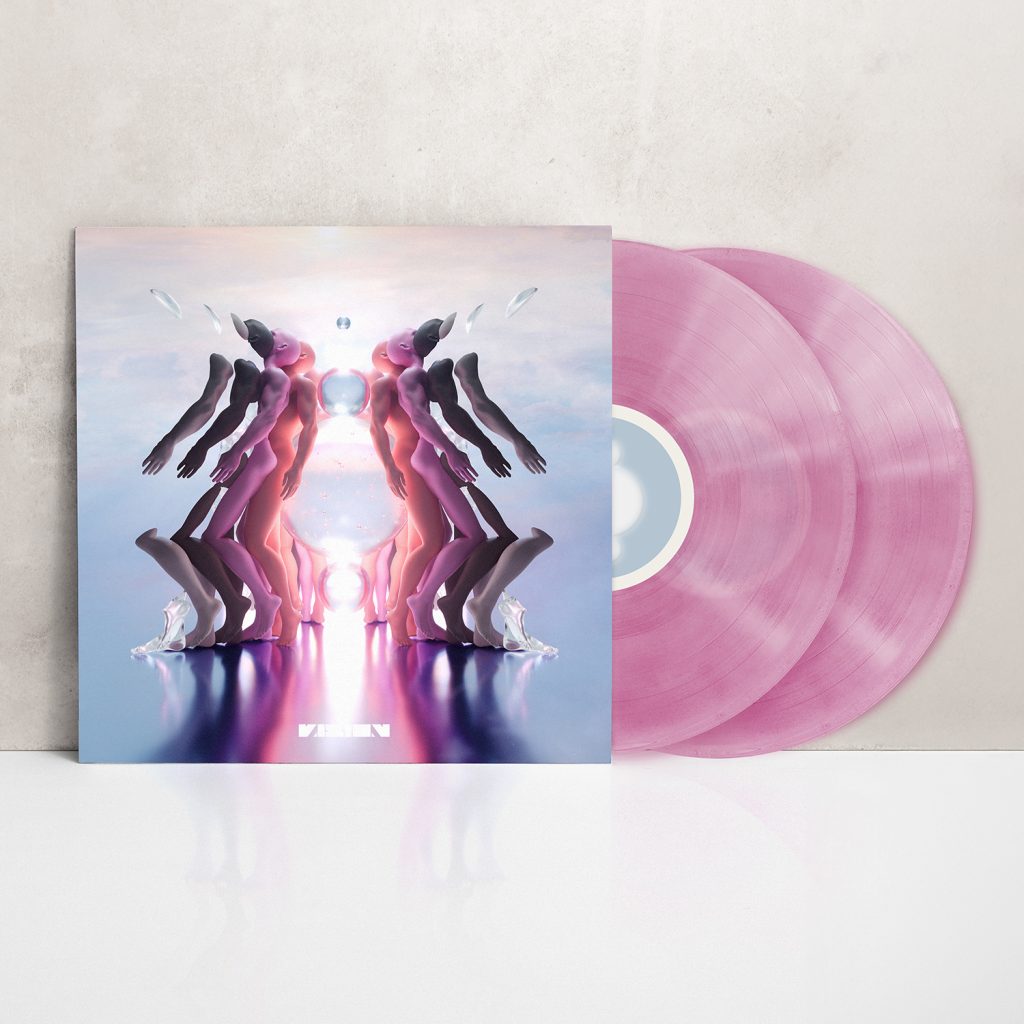
You can support their latest album, IIII, here, which is also available on vinyl.
VIER
Instagram